Architecture that tells a story: four hotels shaping Chiang Mai’s sense of place
Chiang Mai hotel architecture draws on the city’s Lanna heritage, its landscape and a long tradition of timber craft. The best hotels here give guests a reason to remember the stay beyond the room.
We at Niwat Architects have two projects in Thai Hotels, Khum Phaya Resort & Spa and Marndadee Heritage River Hotel. Both are good records of hospitality design rooted in Northern Thailand. The 2026 MICHELIN Guide also recognised Away Chiang Mai Thapae – A Vegan Retreat and Sela Chiangmai. Looking at all four raises a question we find worth asking about Chiang Mai hotel architecture: what makes a hotel stick in your memory?
Khum Phaya Resort & Spa: Lanna heritage in Chiang Mai hotel architecture
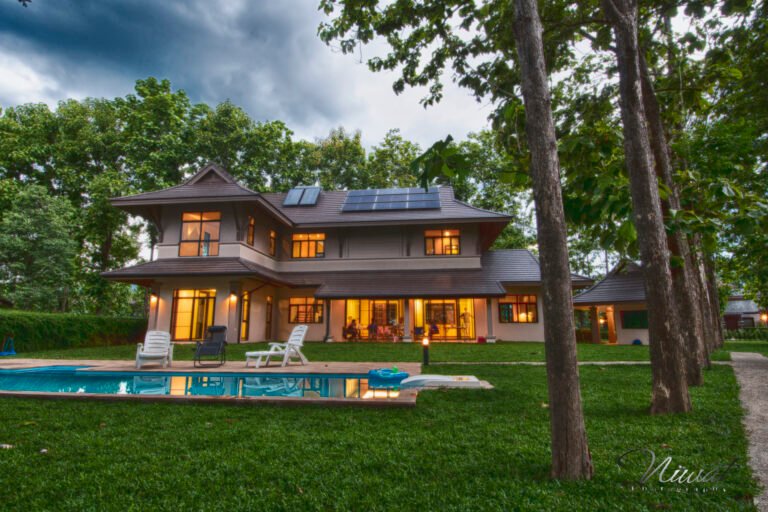
Khum Phaya takes the architectural language of traditional Lanna houses and applies it to a contemporary resort. The design draws on research into Northern Thai residential architecture, and you can see it in the timber construction, the teak carving and the traditional building elements. You can read more on our Khum Phaya Resort & Spa
The landscape does as much work as the buildings. Mature trees, planting, water and the layout of the guest spaces all shape the atmosphere. A long swimming pool runs through the resort and ties the accommodation to its surroundings.
We never wanted the Lanna references to be decoration. The question was how the forms, materials and craftsmanship of the old houses could change what it feels like to stay at a modern resort, and that is what the project tries to answer.
Marndadee Heritage River Hotel: keeping memory in the buildings
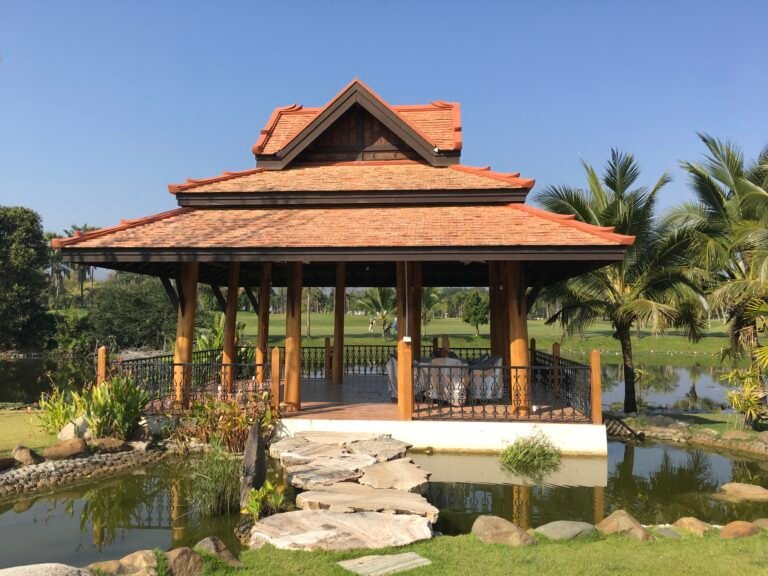
Marndadee shows a different side of Chiang Mai hotel architecture. It sits beside the Ping River in Saraphee and mixes Lanna, Lanna Colonial and Chinese-Lanna influences, which reflects how varied the region’s culture has been. Our Marndadee Heritage River Hotel project has the full story.
The clients already owned several wooden rice-storage barns, and the project turned them into villas. Plenty of developments would have cleared them away. Here the barns, with their age and character, became part of what guests experience.
The owners’ collection of antiques and artworks matters just as much. As Thai Hotels describes it, antique furnishings and decorative objects make up a large part of the interiors, and a small museum gives guests another way into Thai culture.
What we like about Marndadee is that the heritage is something you live in. It does not stop at the facade.
Away Chiang Mai Thapae – A Vegan Retreat: wellness as the organising idea
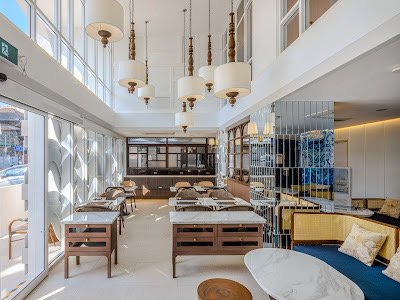
Away is built around vegan living and wellness. It sits near Tha Phae Gate, so the old city’s streets, temples and cultural sights are close by, while the retreat itself stays quiet.
The concept runs through everything: vegan dining, wellness experiences and a hotel with no alcohol. The hotel announced its selection for the MICHELIN Guide 2026, and it is a real milestone for a place with such a specific position.
It works because the idea is clear. Architecture, interiors, food, wellbeing and service all point the same way, so guests can describe the place afterwards in a sentence.
Sela Chiangmai: a house with its own character
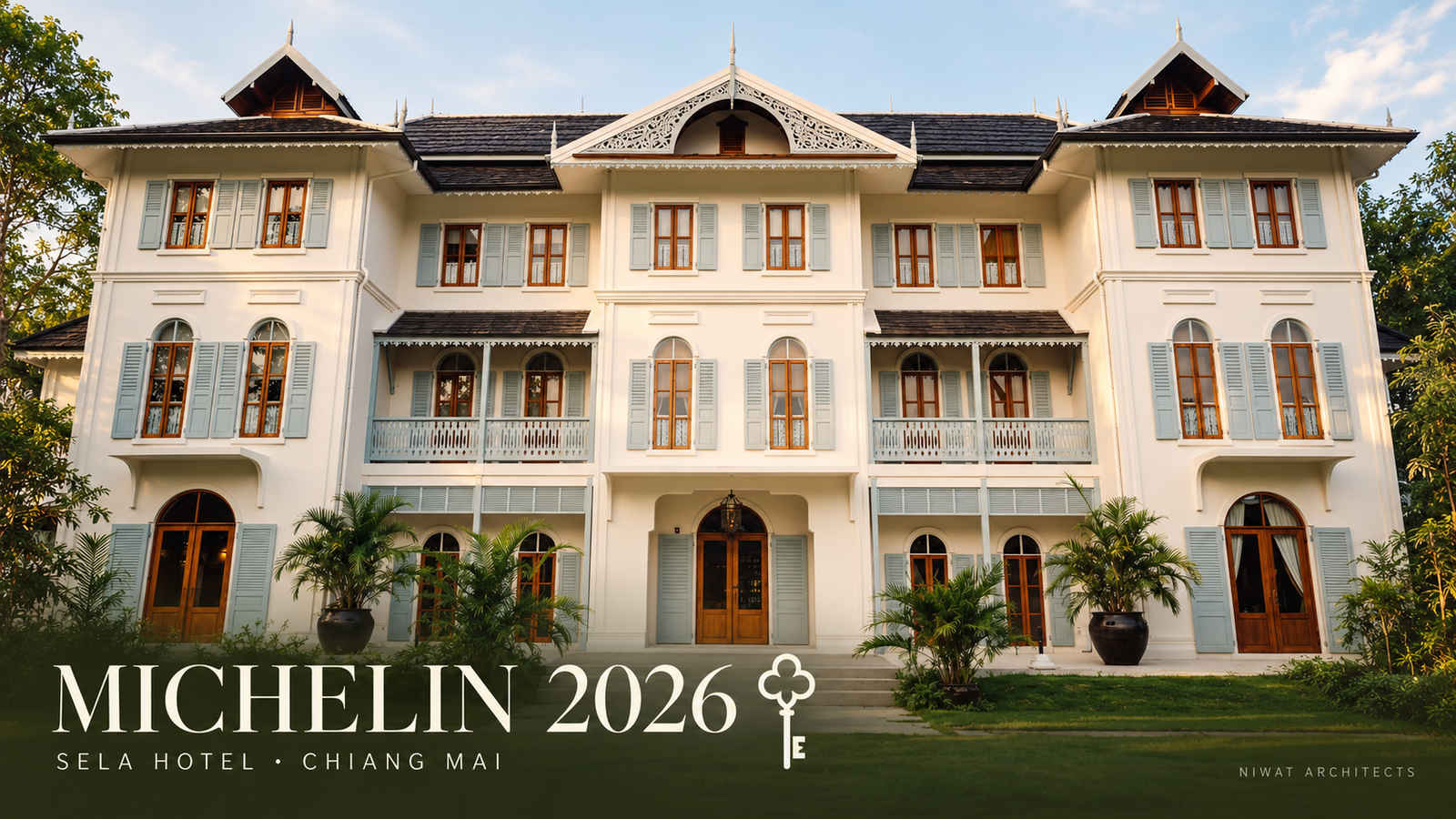
Sela Chiangmai received its first MICHELIN Key in the 2026 selection. In its announcement, the hotel credited its team, the character of the house and the experience they have built, and said it wants to keep its connection to place.
The Key matters because the programme looks at architecture and interior design, consistency of service, individuality, value, and whether a hotel offers something distinctive tied to its local setting. Sela is now among the Chiang Mai hotels in the 2026 selection.
It is also a useful reminder that good Chiang Mai hotel architecture does not depend on size or lavishness. A hotel with a strong character and well-made spaces, and an identity that fits its surroundings, can matter more than either.
What Chiang Mai hotel architecture can learn from these four projects
The four hotels go about it differently. Khum Phaya reinterprets Lanna architecture and craftsmanship. Marndadee combines old structures, collected objects and a riverside site. Away expresses a vegan, wellness-minded way of living, and Sela shows what individuality and a sense of place can do.
What they have in common is that none of them relies on the buildings alone. For architects, that means paying attention to how a building sits in its surroundings, what its materials say, how existing structures and cultural references can be brought in with care, and how the layout of the spaces shapes a guest’s day.
It also means accepting that hospitality design is shared work between designers, owners, operators and the local culture. A hotel’s identity holds together when the physical environment and the service delivered inside it are pulling toward the same vision. If you are planning a hospitality project, contact us or learn more about us.
Looking ahead: Chiang Mai hotel architecture rooted in place
Travellers are coming to Chiang Mai for culture, wellbeing and places that feel particular, and hotel architecture has a hand in shaping how the region is seen.
The projects in Thai Hotels show what architectural research, local materials, traditional craft and the reuse of existing buildings can add to a hotel. The MICHELIN recognition of Away and Sela shows that individuality and a clear sense of place are still being rewarded.
For us, Khum Phaya and Marndadee remain good examples of how a contemporary hotel can stay connected to the history, landscape and culture of Northern Thailand. The ones that work are those where guests can feel the story of the place without being told it.
Niwat Architects
Architecture shaped by place, culture and the experience of living.